
The Little Boy in the Spider-Man Suit Who Never Came Home
- Senai

- Feb 2
- 9 min read
On the morning of September 12, 2014, three-year-old William Tyrrell vanished from a quiet home in Kendall, New South Wales, in a matter of minutes. He had been visiting his foster grandmother with his foster parents and his five-year-old sister, and he was last seen wearing the Spider-Man suit that would later become one of the most recognizable images tied to a missing child case in Australian history. What began as a normal family visit quickly turned into a national nightmare—one that has lasted for years, shifting from theories of abduction to the possibility of a tragic accident and an alleged cover-up.
William Tyrrell was born on June 26, 2011. By the time he disappeared, he was living in foster care, which meant strict legal restrictions prevented his biological parents from being publicly identified for years. In early September 2014, William and his foster family traveled roughly four hours from Sydney to Kendall, a small town about 35 kilometers south of Port Macquarie. They were staying at William’s foster grandmother’s home on Benaroon Drive, a peaceful residential street located close to bushland and the Kendall State Forest. It was the kind of place where children could play outside, neighbors recognized one another, and danger didn’t feel like something that belonged there.
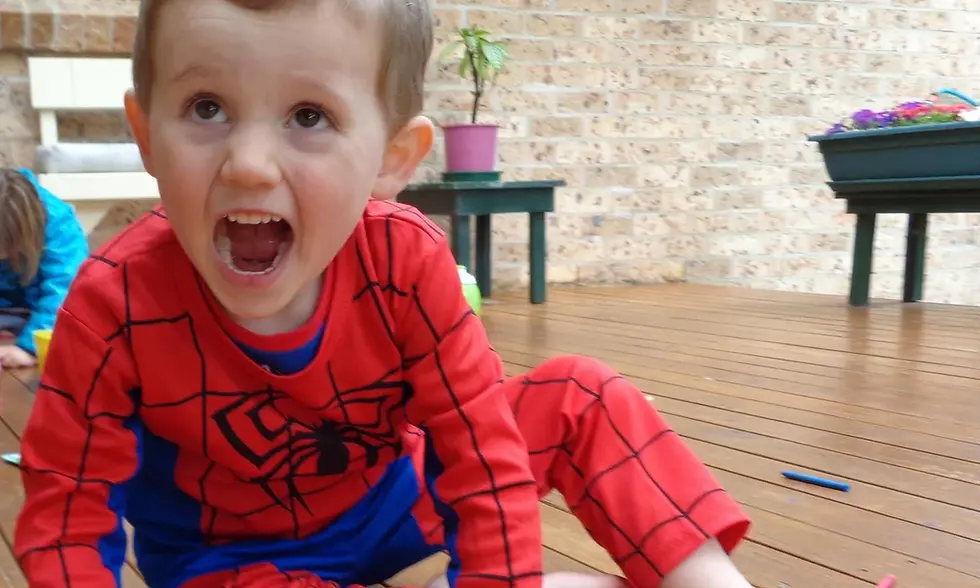
The day before William disappeared, on September 11, 2014, the family arrived in Kendall for the visit. Nothing about the trip seemed unusual. But the next morning, between 10:00 a.m. and 10:25 a.m., William and his sister were playing hide-and-seek in the front and back yard. William’s foster mother and foster grandmother were sitting outside watching them. At some point, William’s foster mother went inside the house to make a cup of tea. It was a short and ordinary moment, the kind of thing that happens every day in homes everywhere. But when she returned, she noticed something that instantly made her uneasy: the yard had gone quiet.
William’s foster mother later described her last clear memory of him as playful and loud, imitating a tiger’s roar while running toward the side of the house. Then, suddenly, there was silence. She became worried after she hadn’t heard him for around five minutes. She began searching the yard and the house, checking the places a small child might hide. But William wasn’t there. He wasn’t in the yard, he wasn’t inside, and he wasn’t calling out. He was simply gone.
Not long after, William’s foster father returned to the home after going to Lakewood on business. He immediately joined the search, moving into the street, knocking on neighbors’ doors, and asking if anyone had seen a little boy in a Spider-Man suit. The fear was rising fast, because it didn’t feel like William had wandered off normally. A toddler could disappear quickly, but the area wasn’t large, and the adults had been nearby. Within minutes, it became clear this was something far more serious than a child playing an extra round of hide-and-seek.
At 10:57 a.m., William’s foster mother called 000 emergency services to report him missing. Police arrived at the property at 11:06 a.m. What followed was an enormous response that transformed Kendall into the center of a desperate search. Hundreds of police officers, members of the State Emergency Service, the Rural Fire Service, and local community volunteers searched day and night. Specialist police units became involved, and the operation expanded rapidly, using motorcycles and helicopters to cover large areas. Police divers searched waterways, dams, and any place where a child might have fallen. Officers searched every home in the surrounding estate multiple times. Detection dogs were brought in, hoping to track William’s scent into the bush or toward a road where he could have been taken.
But one of the most unsettling findings came from the dogs. They detected William’s scent only within the boundaries of the backyard. There was no clear scent trail leading into the forest. No track leading down the street. No obvious direction. It was as if William had been in the yard—and then simply vanished from the world beyond it.
Within days, NSW Police formed a dedicated investigative team called Strike Force Rosann. The case was treated as urgent and high priority, with specially trained investigators experienced in unexplained disappearances of young children. The scale of the investigation grew quickly, becoming one of the largest in New South Wales history. Yet even with the manpower and resources being poured into the case, the early days brought little progress. After five days, police admitted they had not developed any strong leads. The longer William was missing, the more frightening the possibilities became.
As investigators worked to reconstruct the timeline, attention began turning to reports of suspicious vehicles seen near the foster grandmother’s home. Witnesses reported seeing two cars parked on the dead-end road on the morning William disappeared. The vehicles were described as a white station wagon and an older grey sedan. They were reportedly parked between driveways, with the driver’s side windows down, and they were unfamiliar in a neighborhood where people typically recognized one another. These cars were reportedly noticed by William’s foster mother and were never seen again after that day. Police found the circumstances suspicious, believing there was no obvious reason for them to be parked there shortly before William vanished.
Additional vehicle sightings were also reported. At around 9:00 a.m., a green or grey sedan was seen driving past the Benaroon Drive home while William and his sister were riding bikes in the driveway. The car reportedly drove into the no-through road, performed a U-turn in a neighbor’s driveway, and then left the street. Later, another vehicle described as a 4WD was reportedly seen driving out of Benaroon Drive around 10:30 a.m., close to the time William disappeared, and was later spotted speeding down another street in Kendall. Police stated they had known about these vehicles from early in the investigation but chose not to release details publicly until a year later as part of their investigative strategy.
For the first seven years of the investigation, police largely believed William had been abducted. The theory centered on an opportunistic stranger taking advantage of a brief moment when William was out of sight. There was also speculation about possible links to child exploitation, with investigators considering whether someone involved in predatory behavior could have been responsible. Police interviewed dozens of people, including individuals with histories of child-related offences. Media reports claimed that a number of registered sex offenders lived in the surrounding Kendall area at the time, adding to public fear and outrage.

At one point, investigators looked closely at two convicted child sex offenders who may have crossed paths on the day William disappeared. Reports suggested the men lived in the area and may have been driving vehicles matching the descriptions of the grey sedan and white station wagon seen near Benaroon Drive. They were also linked to an organization called Grandparents As Parents Again (GAPA) and were described as friends. Both men were questioned and denied being friends or having any involvement in William’s disappearance. The case continued to draw intense scrutiny as police attempted to separate rumor from evidence, and suspicion from proof.
Another major focus of the investigation involved a man who had repaired a washing machine at the Benaroon Drive residence. He later faced unrelated historical child sex charges in Victoria. The man denied any involvement in William’s disappearance and claimed he was not present at Benaroon Drive on the day William went missing. Eventually, it was confirmed he had been elsewhere that morning, and the historical charges against him were dropped or dismissed. Years later, the situation became a scandal when the Supreme Court of New South Wales awarded him $1.48 million in damages plus interest, finding that the lead detective’s pursuit of him was malicious and that fabricated historical sex crime charges had been used with the sole purpose of pressuring him into confessing to William’s disappearance. The ruling was a shocking moment in the case, raising serious questions about investigative conduct and further complicating a mystery already filled with pain and uncertainty.
While police chased leads, the public clung to hope. More than 1,000 reported sightings came in during the first two years alone. Some tips were convincing enough to trigger rapid police responses. A photo taken in Queensland showed a man with a young boy who resembled William, sparking renewed hope—only for authorities to confirm within a day that it was not him. In early 2015, passengers and a flight crew believed they saw William on a flight heading to New Zealand. Police met the plane and investigated, but again it was a false alarm. Another photo from a McDonald’s in central Queensland showed a young boy with a woman who some believed resembled William’s grandmother. Police later confirmed they were not connected to the case. Each reported sighting briefly reignited public emotion before collapsing into disappointment, leaving behind the same unbearable reality: William was still missing.
As the years passed, Strike Force Rosann expanded and the investigation grew even larger. The case became the state’s biggest, involving multiple strike forces and specialists from various squads. Investigators sifted through thousands of pieces of information, interviewed more than a thousand people, and generated an enormous amount of documentation. The search for William stretched far beyond Kendall, reaching across Australia and internationally. Crime Stoppers appeals were shared in numerous countries after requests from the Australian Federal Police, showing how far the case had traveled in the public consciousness.
On September 12, 2016, the second anniversary of William’s disappearance, the NSW government announced a $1 million reward for information about his whereabouts. Unlike many rewards, which are typically paid only after an arrest and conviction, this one included the recovery of William as a condition—meaning information that led to finding him could be rewarded even without a suspect being charged. It became the largest reward ever offered for a missing person in New South Wales history.

In June 2018, police announced plans for a large-scale forensic search in bushland around Kendall, expected to last several weeks. The operation involved expert search teams, including members of the Public Order and Riot Squad, and was designed to uncover any trace of William that may have been missed. Despite the intensity of the search, the case still did not find the breakthrough the public desperately wanted.
Then, in November 2021, the entire direction of the case shifted. NSW Police announced they had received new evidence and were renewing the search for William in three areas surrounding Kendall. This time, authorities openly acknowledged they were searching under the assumption they might find human remains. One senior officer stated it was highly likely they would be looking for William’s body. This marked one of the darkest turning points in the investigation, as hope of finding William alive began to fade publicly.
Only days later, major media outlets reported that William’s foster mother and his foster grandmother—who had since passed away—were being treated as persons of interest. The investigation began focusing on the possibility that William suffered an accidental fall from a balcony at the foster grandmother’s property. If that theory was true, it would mean William’s disappearance wasn’t the result of a stranger snatching him from the yard, but something that happened suddenly, close to home, followed by actions taken to hide what really occurred.
In April 2022, William’s foster mother was charged with giving false or misleading information during a NSW Crime Commission hearing. The charge suggested investigators believed she had not been truthful about key details surrounding William’s disappearance. However, she was found not guilty in November 2022. Even with that outcome, the investigation continued moving forward, and the questions surrounding William’s final moments remained unresolved.
On June 27, 2023, police recommended charges against William’s foster mother for perverting the course of justice and interfering with a corpse. Authorities alleged that she concealed William’s accidental death and then disposed of his body. The recommendation was a devastating development for the case, because it suggested that the truth may have been hidden not by a stranger, but by someone within William’s own circle of care. If proven, it would mean the years of searching, hoping, and pleading for answers were haunted by the possibility that the answer was never out in the bushland at all—it was kept secret.
Despite the enormous search efforts, the countless tips, and years of forensic work, William Tyrrell’s case remains one of Australia’s most heartbreaking mysteries. Investigators have never publicly confirmed exactly what happened in a way that brings final closure. For years, police insisted they would treat the case as though William could still be alive until evidence proved otherwise. But by 2021, the language changed, and officials openly stated they believed they were likely searching for remains. The case continues to carry the weight of unanswered questions, public outrage, and deep grief.
William disappeared in broad daylight, in a quiet neighborhood, while adults were close enough to hear him moments earlier. No confirmed witness has ever come forward with a definitive account of what happened in those crucial minutes. No single piece of evidence has been publicly revealed that fully explains how a child could vanish so quickly and leave behind so little trace. And that is why the case has never truly left the public mind.
Even now, years later, people still picture that little boy in the Spider-Man suit and wonder how a child could disappear from a family yard without a scream, without a struggle heard, and without a trail leading anywhere. Whether the truth is abduction, accident, or something even darker, the disappearance of William Tyrrell remains a story that refuses to fade—because somewhere in all the unanswered space between silence and time, a little boy is still missing.


Comments